How One Simple Idea Connected Communities Around the World
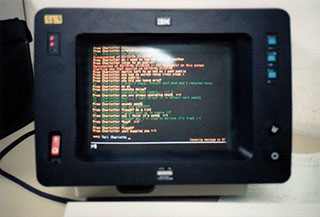
"It's a creative process that is not the same as painting or drawing, but you also start from a blank sheet and write your program," Eric Thomas said. "I can write a program for anything. It's up to me. My imagination is the limit."
In the mid-1980s, email made it possible to communicate across continents, but group discussions were still difficult to manage. If someone wanted to reach dozens of colleagues, addresses had to be managed by hand, and emails were frequently delayed due to the extremely limited bandwidth on the lines connecting Europe and the United States.
Eric Thomas, then an engineering student studying in Paris, didn't set out to build a company or platform. He invented a way to solve a specific, real-world problem.
The solution became LISTSERV®
A message sent to a single address could now reach everyone on the list with subscriptions managed automatically. With only a single copy of each email traveling across the Atlantic, the delivery delays caused by overloaded lines largely disappeared.
Paris → Geneva → Stockholm → Washington, D.C.

"I didn't have a master plan. I didn't even have a business plan. What I did have was a clear vision, and the determination to make it happen," Eric Thomas said.
By the early 1990s, LISTSERV had become an essential tool for academic collaboration on BITNET and EARN, networks linking thousands of universities worldwide.
As Eric completed his studies, he kept refining the software from Europe's top research environments.
During these years of hands-on engineering, long before "scaling" became a buzzword, LISTSERV didn't merely sit on top of the network. It became part of the infrastructure, allowing large-scale communication to function smoothly and reliably.
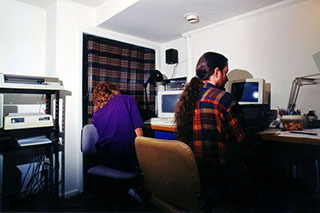
"For about a year, all I did was program, eat and sleep," Eric Thomas said. "It was a huge amount of work because I had nobody to help me, but I felt I had to do it. I couldn't let my baby die."
In 1994, with just $3,000 and a laptop, Eric Thomas founded L-Soft in the United States to bring LISTSERV to more platforms, including Windows, Unix and VMS to keep the software alive as organizations were increasingly abandoning the mainframe computers on which it operated.
From Maryland and Washington, D.C., he continued developing LISTSERV with a small, dedicated team. In the beginning, resources were limited but as adoption grew so did the demand for reliable and scalable email list technology.
These early years created the international foundation on which LISTSERV and L-Soft still stand.
Across four decades, LISTSERV has repeatedly set industry standards.
LISTSERV is DevelopedLISTSERV automated email list management. People could now join and leave email groups of their choice, bringing true opt-in/opt-out control to email communication. |
Double Opt-InLISTSERV pioneered confirmed subscription consent, the global best practice for permission-based email communication. |
Integrated Spam FilterLISTSERV introduced the first built-in spam filter in this category of software. |
100 Million SubscriptionsLISTSERV lists surpassed 100 million subscriptions, reflecting its position as the de facto global standard for email-based communities. |
Built-In Anti-Virus ProtectionLISTSERV became the first email list manager to include server-side virus scanning in partnership with cybersecurity company F-Secure. |
Authentication and DeliverabilityLISTSERV introduced support for DKIM, SPF and DMARC to ensure continued deliverability and trust in today's email landscape. |
These innovations helped define trustworthy, large-scale email communication long before modern social platforms existed. None of these changes were driven by trends. They were responses to real operational problems, solved early and solved carefully.

"Sometimes you set about solving a small problem, and later you realize you solved a big one," Eric Thomas said.
Today, more than 40 years after that birthday in Paris, LISTSERV remains one of the Internet's longest‑running, continuously developed communication technologies and one of the few foundational tools with European roots still thriving.
Recent releases such as LISTSERV 17.5 bring a modern interface, responsive design and enterprise‑grade authentication, which is proof that Eric's commitment to meticulous, long‑term engineering hasn't faded.
From universities and governments to non-profits and scientific organizations, LISTSERV continues to enable asynchronous collaboration – the kind of thoughtful, human‑centered communication the early Internet was built on.

Hear Eric Thomas, the inventor of LISTSERV, in his own words, reflecting on ideas that helped shape the future of digital communication. This story unfolds across five short parts.
1. What's the story behind LISTSERV?
2. Why has LISTSERV stood the test of time?
3. How does email compare to social media?
4. Why did you start L-Soft in the U.S?
5. What were some of the early challenges?
Was this article helpful to you? Would you recommend it to a colleague? Your input helps us create content that truly supports your work. Thank you!


 Want More Insights? Catch up with the latest LISTSERV developments, industry best practices, expert tips, tutorials and more. |
LISTSERV is a registered trademark licensed to L-Soft international, Inc.
See Guidelines for Proper Usage of the LISTSERV Trademark for more details.
All other trademarks, both marked and unmarked, are the property of their respective owners.